- A Thank-You Message Is Not the Same as Showing Impact
- The Story Donors Want to Follow Is What Changed
- Make the Outcome Visible Without Turning It Into Another Campaign
- Give the Story a Place to Live Beyond the Fundraising Event
- Transparency Is More Than a Photo and a Donation Total
- The Next Donation Begins With the Last Promise Kept
The fundraising campaign is over. The donation page has stopped flashing new contributions, the event banners are coming down, and your team is already thinking about the next big initiative. But there's one audience you shouldn't leave behind: the people who made the campaign possible.
Donors didn't contribute just to watch a number climb on a fundraising dashboard. They gave because they believed their money could make something better. If all they receive afterward is a generic thank-you message, that belief is left hanging in the air. They know their donation went through, but they may have no idea what happened next.
For nonprofits, charities, and community organizations, this is where the real relationship begins. Raising money is one milestone. Showing what that money accomplished is how you give supporters a reason to stay connected long after the campaign ends.
A Thank-You Message Is Not the Same as Showing Impact
A heartfelt thank-you matters. Nobody wants to feel like an ATM with an email address. But appreciation and accountability serve different purposes, and one shouldn't be mistaken for the other.
A thank-you confirms that you value the person who contributed. An impact update demonstrates that you value the purpose they supported. The difference is simple, yet it can completely change how donors perceive your organization.
Imagine a local nonprofit raising $15,000 to provide school supplies for children in underserved communities. The campaign reaches its goal, and every donor receives a message celebrating the success. That's a good start. But what happens when a donor wonders how many students received supplies, which items were purchased, or whether the program reached the communities it intended to serve?
Without a meaningful update, supporters must fill in those blanks themselves. Some might assume everything went according to plan. Others may quietly question whether their contribution made a difference. Neither outcome is ideal when your organization wants to build relationships based on confidence rather than guesswork.
The solution isn't to produce a glossy annual report for every small campaign. It's to communicate the outcome in a way that is specific, understandable, and proportionate to the project.
The Story Donors Want to Follow Is What Changed
People naturally connect with outcomes more easily than administrative milestones. Completing a purchase, hosting an event, or reaching a fundraising target can be important, but those activities don't automatically explain the impact.
A useful donor update connects three pieces of the story: what resources were available, what the organization did with them, and what changed as a result.
For example, a food assistance program might report how much funding was allocated to purchasing groceries, how many food packages were distributed, and how many households received support during the reporting period. A community education initiative could describe the learning materials purchased, the sessions delivered, and the number of participants reached.
These details turn an abstract donation into something supporters can understand. Where appropriate, photographs, short testimonials, and firsthand accounts can make the story more human. Just make sure the people featured have given informed permission, especially when children or vulnerable communities are involved.
Accuracy matters more than dramatic storytelling. If a program is still underway, say so. If expenses changed because supplier prices increased, explain the adjustment. If the final outcome fell short of the original target, describe what happened and what your team plans to do next.
Transparency isn't about making every project look perfect. It's about showing supporters that your organization takes its commitments seriously, including when circumstances don't unfold as expected.
Make the Outcome Visible Without Turning It Into Another Campaign
Donor communication doesn't have to become a second fundraising operation. In fact, the most useful updates are often refreshingly straightforward.
Start with a short summary of the original goal, followed by the work completed so far. Add a few meaningful figures, explain any important changes, and identify what remains to be done. If the project is ongoing, include a realistic timeframe for the next update. That gives donors a clear picture without asking them to dig through a long report.
Consider a neighborhood cleanup funded by local residents and small businesses. Instead of posting another celebratory graphic that simply announces the amount raised, the organizers could share the number of volunteers involved, the areas cleaned, the waste collected, and the next scheduled maintenance activity. Suddenly, the campaign has a tangible result and a clear continuation.
Keep the information easy to scan, but don't reduce it to numbers without context. Reporting that 300 people participated is useful; explaining what those participants helped achieve is even better. The goal is to make the connection between contributions and outcomes obvious without overstating what the evidence supports.
A consistent reporting format can also save your team time. You don't need a new communications strategy for every project. Build a simple template around the questions donors are most likely to ask, then adapt the details to the campaign. The story should change with the project, even when the reporting process stays familiar.
Give the Story a Place to Live Beyond the Fundraising Event
One of the easiest mistakes to make is treating impact reporting as a single social media post that disappears beneath newer content within a few days. Donors who miss that post may never see the update, and supporters who want to revisit the results may struggle to find the original information.
Give important project updates a stable home. A dedicated page on your website can hold the campaign's purpose, spending summary, progress reports, and final results. Your Facebook Page can then serve as a distribution channel, helping supporters discover the update and directing them to the fuller story.
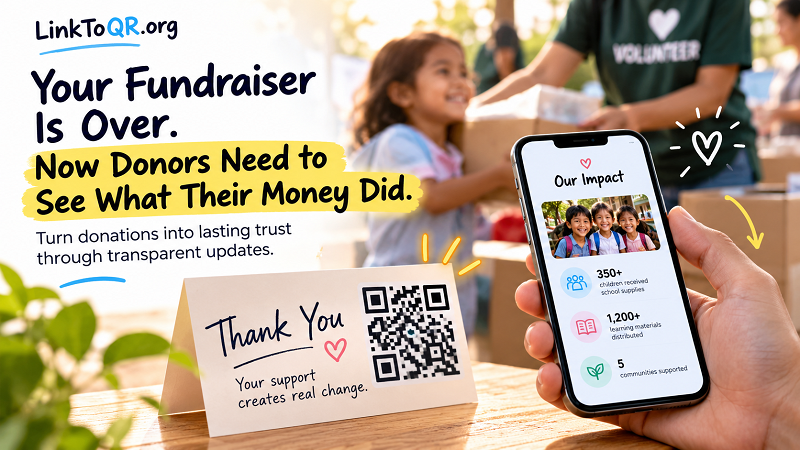
This is also where printed materials and physical spaces can connect with your online communication. A QR code on a thank-you card, event display, community noticeboard, or project summary can take people directly to the relevant update. If Facebook is where your organization publishes its community news, you can get facebook qr code to create a convenient route from offline materials to your Facebook presence.
The important part isn't the technology itself. It's the destination. A QR code that leads to an inactive page or a feed full of unrelated announcements won't answer the donor's questions. Link it to information that is relevant, current, and easy to navigate. Where possible, direct supporters to the specific campaign update rather than making them search for it themselves.
A permanent destination also makes follow-up communication easier. You can reference the same report in a newsletter, a post-campaign email, or a future community presentation. Instead of recreating the story every time someone asks about the project, your team has one reliable place to point them.
Transparency Is More Than a Photo and a Donation Total
A compelling impact report should leave donors better informed, not merely more impressed. That means going beyond attractive photos and headline numbers to consider what the information actually proves.
First, distinguish money raised from money spent. If your organization collected $20,000 but has only allocated $12,000 to the project so far, report those figures accurately. Explain whether the remaining funds are reserved for upcoming activities, administrative expenses, or another purpose permitted by the donation terms.
Second, distinguish outputs from outcomes. Distributing 500 meal packages is a measurable activity. Demonstrating an improvement in food access requires different evidence. Both types of information can be valuable, but they answer different questions. Being precise about that distinction helps prevent well-intentioned marketing from turning into exaggerated claims.
Third, respect the privacy and dignity of the people your organization serves. A donor's desire to see results does not justify publishing someone's personal circumstances, identifiable records, or vulnerable moments without appropriate consent. Use aggregated figures, anonymized stories, and approved imagery whenever possible.
Finally, make room for questions. Provide a suitable contact channel for supporters who want clarification about spending, project progress, or future plans. Not every report needs to answer every possible question, but donors should know where to turn when something isn't clear.
These practices don't make your organization look less confident. They demonstrate that confidence is grounded in responsible reporting rather than carefully staged appearances.
The Next Donation Begins With the Last Promise Kept
A completed fundraiser isn't the end of a donor relationship. It's an opportunity to show that the trust placed in your organization was taken seriously.
When supporters can see what happened, understand how resources were used, and follow the results over time, they have a stronger basis for deciding whether to stay involved. Some may donate again. Others may volunteer, share your work, introduce new supporters, or simply become more confident advocates for your mission. None of those outcomes is guaranteed, but clear communication gives the relationship a better foundation.
You don't need elaborate reports or expensive technology to get started. You need accurate information, a clear explanation of the results, and a reliable way for people to find the story after the fundraising event is over.
The real test of a successful campaign isn't just how much money came in. It's whether your organization can show, honestly and clearly, what happened because people chose to help.