- The Real Work Starts After Someone Says "I'm In"
- Build One Clear Path From Interest to Assignment
- Ask Questions That Help You Assign People, Not Just Count Them
- Put the Sign-Up Where Potential Volunteers Will See It
- Make Confirmation and Shift Changes Part of the System
- Measure Whether Your Recruitment Process Is Actually Working
- A Better Volunteer Experience Starts Before Day One
Recruiting volunteers sounds simple until the applications start rolling in. Suddenly, you're juggling emails, checking availability, answering the same questions, and trying to figure out who's actually showing up on Saturday morning. The problem isn't always finding willing people. It's turning that initial enthusiasm into a reliable team that knows where to be, what to do, and when to show up.
Whether you're organizing a school fundraiser, a neighborhood cleanup, a charity event, or a community food drive, a better sign-up process can save hours of administrative work. You don't need an expensive recruitment platform or a complicated management system to get started. You need a clear process, the right questions, and a practical way to keep everyone on the same page.
The Real Work Starts After Someone Says "I'm In"
Getting people interested is only the first step. Once registrations arrive, the coordination work begins. One person can volunteer on Friday but not Saturday. Another has useful photography skills but wants to avoid physically demanding tasks. Someone else signs up enthusiastically and then disappears when it's time to confirm their schedule.
When these details live in separate email threads, text messages, and paper notes, mistakes become almost inevitable. You might assign too many people to one task while leaving another position unfilled. Worse, you could spend the night before an event contacting volunteers because nobody knows who's confirmed.
The solution isn't to send more messages or build a bigger spreadsheet. It's to establish one reliable place for collecting information and a consistent process for turning that information into assignments.
Build One Clear Path From Interest to Assignment
Think of volunteer recruitment as a short journey rather than a single registration form. Every step should make the next one obvious, both for your team and for the people giving their time.
1. Introduce the opportunity. Explain what the event is about, why volunteers are needed, and what participants can expect. Include the date, location, time commitment, and any important requirements. Vague announcements attract questions; clear announcements help people decide whether the opportunity fits their schedules.
2. Collect registrations in one place. Use a dedicated sign-up form instead of asking people to register through several unrelated channels. This gives your team a consistent set of responses to review and makes it easier to organize applicants without repeatedly copying information from messages.
3. Match people with suitable tasks. Review availability, interests, relevant experience, and any role-specific requirements. A volunteer who enjoys welcoming guests might be a great fit for check-in, while someone comfortable with spreadsheets could help manage registration records.
4. Confirm assignments directly. A submitted form doesn't automatically mean someone has accepted a shift. Send each volunteer their assigned task, reporting time, location, and contact person. Ask them to confirm so you can identify gaps before the event begins.
5. Keep the team informed. Send reminders when appropriate and communicate changes as soon as possible. If someone cancels, you should be able to identify which shift needs coverage and who might be available to help.
This simple workflow creates a clear distinction between people who expressed interest, people who registered, and people who committed to a specific assignment.
Ask Questions That Help You Assign People, Not Just Count Them
A registration form shouldn't feel like a job application for a corporate executive. Keep it focused on information that helps you organize the event. Every extra question creates another reason for someone to abandon the form, so make each field earn its place.
Start with the essentials: name, preferred contact method, and availability. Then ask which dates or shifts work for the volunteer and what types of tasks interest them. If a role requires particular skills or experience, include a relevant question rather than asking everyone to provide an extensive background.
For example, a community food drive might need volunteers for sorting donations, packing food boxes, greeting visitors, and coordinating deliveries. Asking applicants to select their preferred activities gives organizers a useful starting point for assigning responsibilities. You can also ask whether they're available for the entire shift or only part of it.
Be transparent about what happens next. Tell applicants when they can expect a response, how assignments will be confirmed, and whom to contact with questions. Collect only the personal information you genuinely need, restrict access to registration records, and explain how those details will be used.
Most importantly, test the form on a phone before publishing it. Volunteers may discover your opportunity while scrolling through a community group or reading a printed announcement. A form that works smoothly on a small screen makes registration much easier.
Put the Sign-Up Where Potential Volunteers Will See It
Even a well-designed form won't help much if people can't find it. Make registration accessible at the places where your intended volunteers already spend time, including school noticeboards, library bulletin boards, community centers, partner businesses, event posters, and social media announcements.
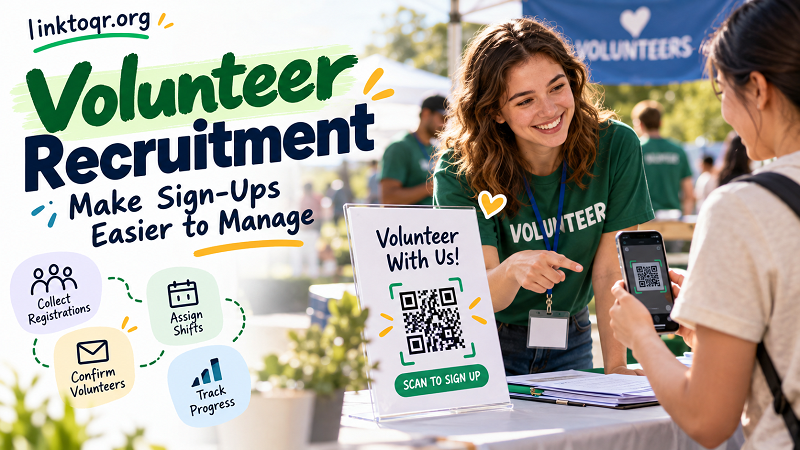
For printed materials, a QR code can bridge the gap between a physical announcement and an online registration form. Instead of asking someone to type a long web address into their phone, you can let them scan the code and open the sign-up page directly. If you're preparing a printed recruitment poster, a google form to qr code workflow can help you turn your form's URL into a scannable code.
Give the QR code enough space to scan easily, maintain strong contrast against the background, and print it at a practical size. Always include a short call to action, such as "Scan to Volunteer," so people understand what they'll get by scanning. For audiences who may not use QR codes, include a readable alternative, such as a short URL.
Before distributing your materials, test the code with several phones and confirm that the form opens correctly. Check the destination itself, too. If the form requires sign-in or restricts access to a particular organization, prospective volunteers may hit a dead end even when the QR code works perfectly.
Make Confirmation and Shift Changes Part of the System
One of the easiest mistakes in volunteer coordination is treating every registration as a confirmed commitment. A submitted form tells you that someone expressed interest; it doesn't tell you whether they've accepted a particular shift or received the necessary instructions.
Use a simple tracking sheet or volunteer management tool to organize each person's status. Useful categories include New Registration, Under Review, Assignment Sent, Confirmed, and Completed. Include the assigned task, shift time, responsible coordinator, and any essential follow-up notes.
This structure helps you answer practical questions quickly: Which positions are still open? Who hasn't confirmed? Which volunteers need instructions? Who should be contacted if a shift becomes vacant?
Set a reasonable confirmation deadline and send reminders before important milestones. If someone cancels, update the record immediately rather than relying on memory or an old message thread. For recurring programs, document the process so another team member can step in when the main coordinator is unavailable.
You don't necessarily need automation for every step. A small community project may work perfectly well with a shared spreadsheet and a few scheduled reminders. The goal is to reduce uncertainty, not to turn volunteering into a paperwork marathon.
Measure Whether Your Recruitment Process Is Actually Working
A large registration count looks encouraging, but it doesn't tell the whole story. If 100 people sign up and only 30 confirm their assignments, your team still has a coordination problem to solve.
Track a handful of useful metrics after each recruitment campaign. Start with the number of valid registrations, the percentage of applicants who confirm, the number of shifts filled, and the percentage of confirmed volunteers who actually attend. You can also measure how long it takes to process an application or fill a vacant position.
These numbers help you identify where the process breaks down. A low registration rate might suggest that your announcement isn't reaching the right audience or that the form is too complicated. A high registration count paired with low confirmation rates may indicate unclear expectations or slow follow-up. Frequent last-minute cancellations could point to scheduling problems or insufficient reminders.
Use the results to make one or two meaningful improvements at a time. Shorten an unnecessary form, clarify shift requirements, move the sign-up link to a more visible location, or send confirmation messages sooner. Small changes become valuable when they consistently remove friction.
A Better Volunteer Experience Starts Before Day One
Volunteers donate something valuable: their time, energy, and willingness to help. A disorganized registration process can waste that goodwill before anyone even arrives at the event. Clear instructions, accessible sign-ups, realistic assignments, and timely communication show people that their contribution is being taken seriously.
Start with one registration channel, ask only useful questions, track each applicant's status, and confirm every assignment. Make the form easy to reach from both digital announcements and printed materials, then review the results after each event.
You don't have to build a perfect system overnight. You just need a process that helps the right people find the right opportunities without making everyone jump through unnecessary hoops. When registration and coordination run smoothly, your team spends less time chasing details and more time doing the work that brought everyone together in the first place.